
How to choose big bags: load, filling and discharge.
A poorly chosen big bag tears, loses its shape or doesn't discharge properly. These are the points to define before buying bulk bags for your operation.
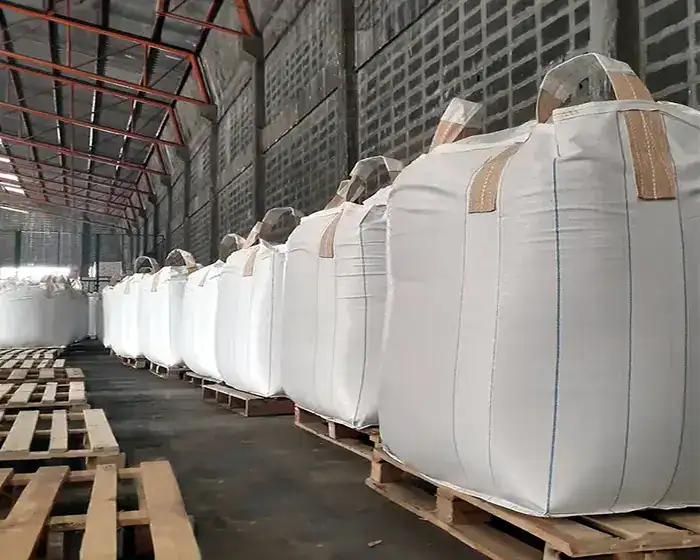
Big bags, also called bulk bags or FIBCs, let you move hundreds of kilos of bulk material in a single bag. But not all of them serve the same purpose: the load, the type of product and how you fill and empty it determine which bag you need.
What is a big bag?
A big bag is a flexible container made of woven polypropylene fabric, with loops for lifting by forklift or crane. Its technical name is FIBC, short for flexible intermediate bulk container. It is used for minerals, concentrates, grains, fertilizers, sand, cement, resins and many other products.
1. Define the load per bag
The first detail is how much weight each big bag will carry. The most common capacities range from 500 to 2,000 kg. Choose a bag whose safe working load is equal to or greater than the actual weight of your product.
| Load per bag | Typical use |
|---|---|
| 500 kg | Light or high-volume products |
| 1,000 kg | The most common capacity: grains, fertilizers, supplies |
| 1,500 kg | Dense materials and industrial loads |
| 2,000 kg | Mining, concentrates and very heavy materials |
The safety factor
Big bags are designed with a safety factor: a single-use bag is usually made with a 5:1 factor, meaning it withstands five times its rated load in testing; multi-use bags, with 6:1. If you plan to reuse the bag, this is key.
2. Choose the filling type
- Open top: the bag has no top; practical for filling with a shovel or hopper and for products that are not easily contaminated.
- Filling spout: a sleeve at the top that connects to the filling machine; it prevents dust and losses.
3. Choose the discharge type
- Closed bottom: the bag is emptied by cutting or tipping it; usually used for single-use bags.
- Discharge spout: a sleeve at the base that lets you empty the bag in a controlled way and reuse it.
4. Decide whether you need an inner liner
The liner is a polyethylene inner bag. It protects the product from moisture and keeps very fine particles from escaping. It is recommended for food, powdered chemicals and materials that must not absorb moisture.
5. Woven or laminated fabric
Woven fabric lets the product breathe; laminated fabric has an extra coating that makes it more resistant to dust and moisture. In new big bags, fabric weight usually ranges from 160 to 220 g/m²: the higher the weight, the greater the strength.
When you use our quote builder, we ask for exactly these details: load, filling, discharge, liner and fabric type. That way you get the right bag the first time.
New or used big bags?
The new big bags are the option for sensitive products or when the client requires an unused bag. The semi-new big bags are selected according to how they are filled and discharged, and are a good way to reduce costs. And second-use big bags are suitable for general loads and internal handling.
At Grupo Spectra we work with all three types, and we also buy used big bags from other companies. See the options on our page for big bags. And if you also need pallets to move the bags, see our guide on pallet sizes.
About big bags
Quick answers on this topic.
What does FIBC mean?
How much weight can a big bag hold?
What does a 5:1 safety factor mean?
What is the liner in a big bag for?
Can I reuse a big bag?
Related solutions on this topic
How many big bags do you need?
Build your request with load, filling and discharge, and we'll send you a quote.